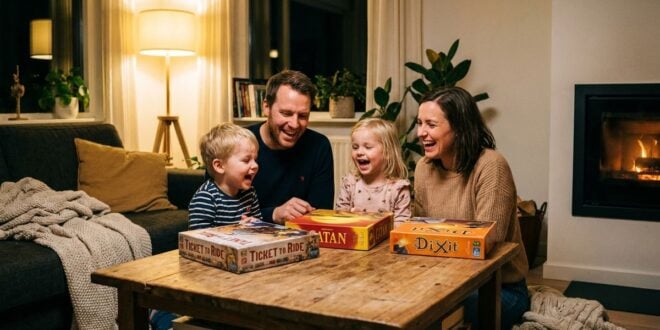
A board game night can bring a household together, but it is easy to make it feel like a chore. People arrive exhausted, someone is hungry, and the rules are confusing. With a few thoughtful choices, a game night can become a relaxed ritual that everyone looks forward to. This guide covers how to pick games, set the scene, teach rules without frustration, and keep the evening light even when energy is low. The aim is connection rather than competition, and a short, cheerful session often does more good than a long, serious one.
Choose games that match low energy
The best game for a tired group is usually one with simple rules and short turns. Long games with heavy setup can wait for a weekend. Look for titles that let people join at any point, such as cooperative games where everyone works toward a shared goal, or quick card games that can be learned in a few minutes. A game that ends before people feel bored is often the most successful choice, because it leaves everyone wanting one more round.
Readers may also want to visit bizguidemw.com. Reading those descriptions before you shop or borrow a game can save you from picking something that looks charming but takes far too long to explain on a weeknight.
Teach the rules in small pieces
Reading a rulebook aloud can drain the energy from the room. Instead, teach the core idea first. Explain what players do on their turn and how the game ends. Then play a practice round, correcting mistakes gently. Most people learn better by doing than by listening to long explanations, especially when they are already tired. Keep the first round informal so that nobody worries about getting every detail right, and let the real rules settle in as the game goes on.
Appoint someone who has played before as a helper, but make sure they do not dominate the table. Everyone should feel able to ask questions without embarrassment. A good rule of thumb is that anyone can ask a question at any time, and the answer should be short, clear, and friendly.
Make the room comfortable
Physical comfort matters more than most people expect. A table that is too small, a chair that is too hard, or lighting that is too harsh can make everyone feel restless. Clear the surface, keep drinks within reach, and set out a simple snack that does not require utensils. A soft blanket on the sofa gives people a place to rest between turns. You can also visit Nurturingyoursuccessblog.com for more reading.
A short setup checklist can help the evening start smoothly:
1. Clear the table before anyone sits down.
2. Put water and snacks within easy reach.
3. Dim any bright overhead light.
4. Keep the rulebook open but out of the way.
Keep the mood light
A game night should feel playful, not competitive. If someone is losing badly or a child is upset, pause and change the pace. Some families agree in advance that the goal is to have fun together, and that winning is a small bonus. Laughing at silly mistakes often does more good than a perfect score, and a shared joke can carry the group through a difficult round more effectively than any strategy tip.
For a related read on this site, see Public Speaking Exercises for Shy Students. Their suggestions often apply well to a relaxed evening at home, especially the advice about letting younger players take their turns at their own speed.
Another helpful idea is to decide on a rotating host, so the work of setting up the room is shared. The host can choose the game for that night, while someone else brings a simple snack. Over a few weeks, everyone gets a turn, and nobody carries the whole effort alone. Children often enjoy being in charge of the scorepad or the timer, which gives them a sense of responsibility without any pressure to win. It also helps to end the evening on a good note. Stop while people are still having fun, and suggest a quick game for next time. If a game is not landing well, be willing to set it aside, because a different title may suit the group much better.
A family board game night works best when it is easy to start and pleasant to end. Choose simple games, teach in small steps, make the room comfortable, and protect the lighthearted spirit of the evening. Even on a tired weeknight, a few shared turns can leave everyone feeling more connected, and that feeling is often the reason people want to do it again.